Business Hours: Monday – Saturday, 9:00 AM – 6:00 PM
1800 560 779
SMART HOME ENERGY STORAGE

The Ultimate Sungrow Battery Guide

Everything you need to know about SBR & SBH. Store more of your solar energy and use it when your home needs it. Dive into our comprehensive guide on Sungrow's high-voltage LFP battery solutions to find a configuration perfectly suited to your home.

Updated October 2026 Verified Compatibility

Verified compatibility and sizing guide for Australian homes.
Sungrow SBR and SBH home battery storage solutions

Sungrow high-voltage LFP battery series

About the Brand

Sungrow — A Global Solar & Energy Storage Company

Discover the company behind Sungrow's solar inverter and residential battery solutions, with a global footprint and an established presence in Australia.

Sungrow official logo SUNGROW

Powering a Cleaner Future

Solar generation, energy storage and power-conversion technologies for modern energy systems.

Global Clean-Energy Technology

Sungrow's Journey

  1. 0

    Sungrow Founded

    Founded by Professor Cao Renxian, Sungrow began its journey in solar inverter technology.

  2. 0

    Australian Market Entry

    Sungrow entered Australia and established its first Sydney office.

  3. 0

    Residential Energy Storage

    Sungrow reported more than 400,000 residential ESS systems installed in Australia.

  4. 0

    Global Installation Milestone

    Sungrow reported more than 870 GW of power electronic converters installed worldwide as of June 2025.

0+
Countries and regions Sungrow reports a global presence spanning more than 180 countries and regions.

From solar generation to energy storage and energy management, Sungrow develops integrated solutions for modern energy systems.

Sungrow Battery Range Australia — Enhanced
Residential Energy Storage

Which Sungrow Batteries Are Available in Australia?

Sungrow's Australian residential battery portfolio includes high-voltage lithium iron phosphate (LFP) battery systems. The two main battery families covered here are SBR and SBH. They offer different storage capacities and modular configurations.

Australian model availability: Sungrow's current Australian product listings show the SBR064–SBR256 and SBH150–SBH400 families. Availability of an individual model can differ by sales channel, so confirm the exact model with Sungrow or your distributor before specifying or purchasing a system.
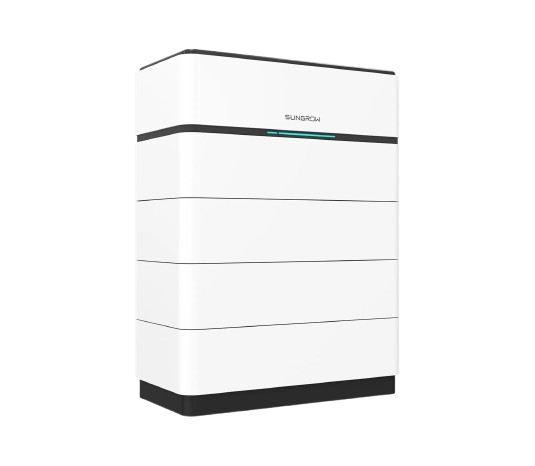
Official Sungrow SBR modular high-voltage home battery system
SBR Series

Sungrow SBR Battery

High-Voltage LFP Battery
6.4–25.6 kWh Published usable energy across the listed range

The SBR range uses 3.2 kWh lithium iron phosphate battery modules and supports configurations from two to eight modules per unit. The listed models range from SBR064 through SBR256.

Sungrow specifies up to 30 A continuous charging and discharging current, up to 100% usable energy, and a plug-and-play design without inter-module cables. Expansion is subject to system compatibility and manufacturer requirements.

View official Sungrow SBR specifications

Sungrow SBR Model Range

Model Modules Published Usable Energy
SBR06426.4 kWh
SBR09639.6 kWh
SBR128412.8 kWh
SBR160516.0 kWh
SBR192619.2 kWh
SBR224722.4 kWh
SBR256825.6 kWh

Source: Sungrow SBR Australian datasheet (PDF). SBR064 consists of two battery modules plus an empty module position, as noted in Sungrow's datasheet.

SBR Key Features

  • LFP Chemistry

    Lithium iron phosphate (LiFePO₄) prismatic cells.

  • Up to 100% Usable Energy

    Sungrow specifies up to 100% usable energy for the supported SBR configurations under stated conditions.

  • Modular Capacity

    Configurations from two to eight modules per unit, covering 6.4–25.6 kWh.

  • Expansion Capability

    Sungrow describes the system as extendable during its lifetime, subject to compatibility and installation requirements.

  • Up to 30 A Continuous Current

    Published maximum continuous charging and discharging current for the SBR family.

  • Plug-and-Play Design

    Compact modular construction with no cables required between the battery modules.
Official Sungrow SBH stackable high-voltage home battery system
SBH Series

Sungrow SBH Battery

High-Voltage LFP Battery
15–40 kWh Published usable energy across the listed range

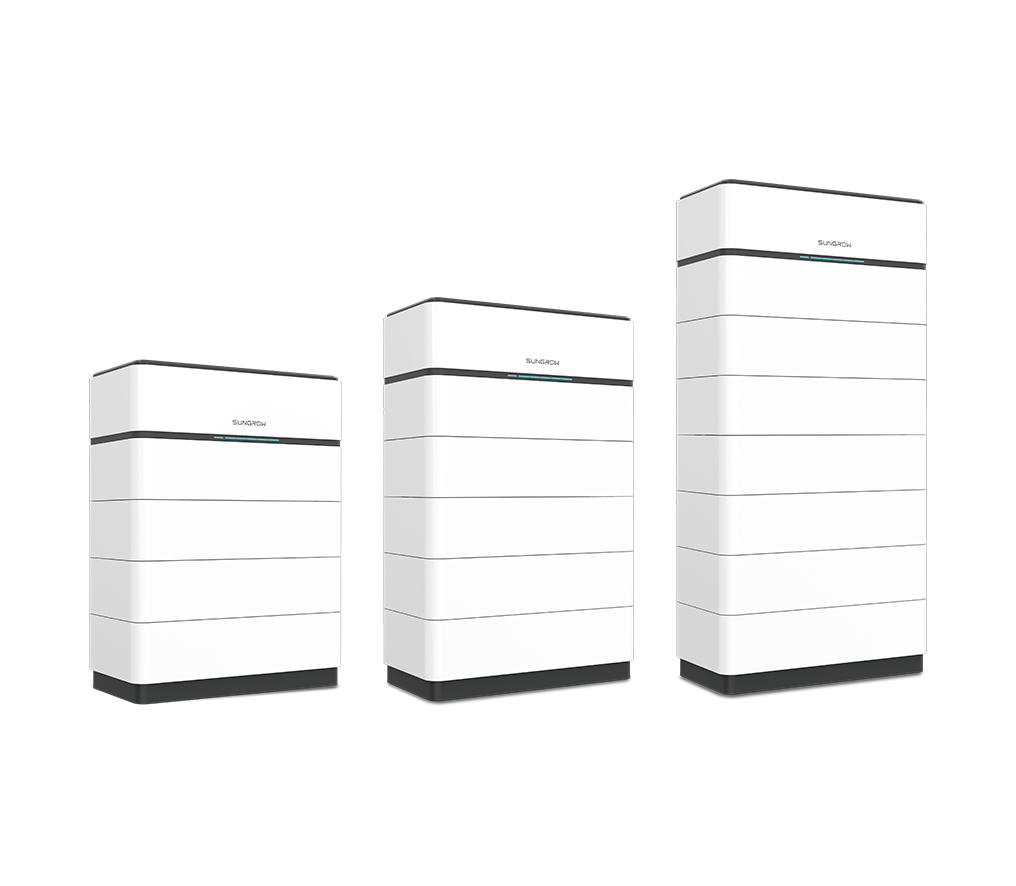
The SBH family uses stackable 5 kWh battery modules. Sungrow's current Australian product page lists the SBH150, SBH200, SBH250, SBH300, SBH350 and SBH400 configurations.

Sungrow specifies up to 50 A continuous charging and discharging current, a modular stackable design, and expansion support for up to eight modules per unit and four units in parallel. The maximum combined capacity stated for this arrangement is 160 kWh.

View official Sungrow SBH specifications

Sungrow SBH Model Range

Model Modules Published Usable Energy
SBH150315.0 kWh
SBH200420.0 kWh
SBH250525.0 kWh
SBH300630.0 kWh
SBH350735.0 kWh
SBH400840.0 kWh

Source: Sungrow SBH datasheet (PDF). Confirm model-level sales availability in Australia with Sungrow or your distributor before purchase.

SBH Key Features

  • High-Voltage LFP

    Lithium iron phosphate prismatic battery cells.

  • 15–40 kWh Configurations

    Listed configurations use three to eight 5 kWh modules per unit.

  • Stackable Modular Design

    Supports up to eight modules per unit and up to four units in parallel, subject to system requirements.

  • Up to 50 A Continuous Current

    Sungrow's published maximum continuous charging and discharging current for the SBH family.

  • IP55 Protection

    The published datasheet specifies IP55 protection. Check the exact model's installation requirements.

  • Natural Convection Cooling

    Listed as the cooling method in Sungrow's SBH product datasheet.

Compare the Ranges

Sungrow SBR vs SBH

Both are high-voltage LFP battery families. Their main differences are the module size, published capacity range and system configuration options.

Feature Sungrow SBR Sungrow SBH
Battery chemistryLiFePO₄ (LFP)LiFePO₄ (LFP)
Published model range6.4–25.6 kWh15–40 kWh
Module energy3.2 kWh5.0 kWh
Modules per unit2–83–8
Continuous charge/discharge currentUp to 30 AUp to 50 A
Usable energy / DODUp to 100% usable energyUp to 100% DOD, settable
DesignModular, plug-and-playStackable, modular
CoolingNatural convectionNatural convection
Degree of protectionIP55IP55
Capacity expansion Supported subject to compatibility and manufacturer requirements Up to four units in parallel, subject to system requirements
General capacity positioning Smaller modular storage configurations Higher-capacity storage configurations

Specifications above are drawn from Sungrow's published SBR datasheet and SBH datasheet. Verify the exact model, inverter pairing and current documentation before using these figures for system design.

The largest battery isn't automatically the right battery.

Battery capacity should be selected around your household electricity consumption, solar generation, compatible inverter and energy goals. Backup capability, power output, expansion limits and actual usable energy depend on the complete system configuration. Model suitability should be confirmed before installation.

Official Sungrow Product Information

Product specifications and availability can change. Capacity figures represent published model specifications and do not guarantee the same delivered energy or power under all operating conditions. Confirm the latest Australian datasheet, compatible inverter, installation requirements, warranty conditions and model availability with Sungrow or an authorised distributor before purchasing or installing a system.

Engineered for your energy needs

Why Choose Sungrow Batteries?

We break down the technical specs into real-world benefits. Here is what a Sungrow battery actually does for your home.

High Performance

Get the most out of every ray of sunshine.

  • Up to 30A Continuous Current This means your battery can charge and discharge very quickly. You can power heavy appliances (like AC or ovens) without overloading the system.
  • Up to 100% Usable Energy Unlike older batteries that trap some power, Sungrow lets you use almost every kWh you store. What you see on the label is what you actually get.

Uncompromised Safety

Built to protect your family and your home, 24/7.

  • Lithium Iron Phosphate (LFP) Chemistry This is the safest battery technology available. It is highly resistant to catching fire or overheating, giving you total peace of mind.
  • Multi-Stage Protection The battery constantly monitors itself. If temperatures spike or voltage drops, it automatically shuts down to prevent any damage.

Total Flexibility

A battery that grows as your family's needs change.

  • Expandable During Lifetime Start with a smaller capacity now, and easily stack more modules later (from 6.4 to 25.6 kWh) if you buy an EV or add a pool.
  • Modular Design (2-8 Modules) It's built like Lego blocks. This means you only pay for the exact amount of storage you need, without wasting money on excess capacity.

Easy Installation

Saves time and money on your install day.

  • Compact & Lightweight It's designed so that a single installer can handle the unit. You won't need a crane or a massive team to get it onto your wall.
  • Plug & Play (Wiring-Less) Modules connect seamlessly without messy internal wiring. This means the installation is faster, cleaner, and less prone to human error.
!

Note: Battery specifications, protection functions, and expansion limits vary by model. Always confirm the latest Australian datasheet with your installer before specifying a system.

Sungrow Battery Rebate Australia

The Australian Government's Cheaper Home Batteries Program provides support through the Small-scale Renewable Energy Scheme (SRES). Eligible battery owners can assign their small-scale technology certificates (STCs) to a registered agent in exchange for an upfront discount.

6.8
Current Factor STCs per eligible kWh (1 May – 31 Dec 2026). Before capacity taper.

How the 2026 Capacity Taper Works

First 14 kWh

Full applicable STC factor.

100%
Over 14 to 28 kWh

60% of the applicable STC factor.

60%
Over 28 to 50 kWh

15% of the applicable STC factor.

15%

* STCs are calculated using eligible usable capacity. Only the first 50 kWh of usable capacity can generate battery STCs; nominal capacity must be 5–100 kWh inclusive.

Published STC Factor Schedule

Jan - Apr 2026 May - Dec 2026 Jan - Jun 2027 Jul - Dec 2027 Jan - Jun 2028 Jul - Dec 2028 Jan - Jun 2029 Jul - Dec 2029
8.4 6.8 5.7 5.2 4.6 4.1 3.6 3.1

Key Eligibility Requirements

  • Nominal capacity must be 5–100 kWh inclusive.
  • Must be installed with a new or existing solar PV system.
  • Battery model must be on the approved product list.
  • Installation and installer must meet scheme requirements.
  • STCs are calculated using usable capacity, not nominal capacity.
  • Applicable factor is determined by install date, not contract date.

Important: The actual incentive depends on eligible usable capacity, installation date, the applicable STC factor and program compliance. Do not treat an STC factor as a dollar rebate: the upfront discount depends on the value agreed with the registered agent. Confirm current eligibility and calculations with the Clean Energy Regulator before making a purchasing decision.

Monitoring & System Access

How to Access Your Sungrow System on iSolarCloud

Sungrow's iSolarCloud platform lets homeowners monitor compatible solar and battery systems through a mobile app or web browser. Follow these steps to get access to your system and check its performance. Visit the official Sungrow iSolarCloud page for platform information.

Use the official platform

Access your system through Sungrow iSolarCloud rather than an unrelated third-party monitoring app.

Use the correct account

Your installer may already have created the plant and assigned monitoring access.

Check connectivity

Live monitoring depends on the system's compatible communication equipment and internet connection.

Follow These 7 Steps

Already have a Sungrow system installed? Start by checking whether your installer has provided account access.

Create or Obtain Your Account

If you do not have an account, follow the registration process and select the appropriate user type, such as End User, where available.

Registration may require details such as:

  • Email address and verification code
  • Password and country or region
  • Server selection and time zone
Already have an installed system? Ask your installer whether an account or plant already exists before creating another one.

Select the Correct Server

When signing in, use the same server associated with your registered account and plant. Selecting a different server can prevent the expected system from appearing.

If you cannot find your plant, confirm the account email and server with your installer before attempting to recreate the plant.

Ask Your Installer to Share Plant Access

For an existing installation, contact the original installer or retailer. They can help identify the existing plant and guide you through the appropriate access or ownership permissions.

Keep your own login details secure. You generally should not need to use an installer's personal account to monitor your system.

See the Sungrow support portal for product documentation and support resources.

Add or Link the System

Plant setup involves associating the correct system and compatible devices with the plant record. Sungrow's documented workflow includes:

  • Complete plant information
  • Add the relevant devices
  • Configure the electricity tariff, where applicable

Australian plant registration may request details such as the National Metering Identifier (NMI), where applicable. Your installer or electricity retailer can help confirm the correct information.

Connect the Communication Device

Your inverter needs a compatible communication setup to send system data to iSolarCloud. The exact equipment depends on the inverter and installation.

Some systems use a device such as Sungrow WiNet-S2, which supports WLAN or Ethernet connectivity.

Important: Check your equipment manual or contact your installer before changing network settings or reconfiguring the communication device.

Check Your iSolarCloud Dashboard

Once your plant is correctly linked and communicating, the dashboard may show the following information, depending on your system, equipment and configuration:

Solar generation
Battery charging and discharging
Household energy consumption
Grid import and export
Battery state of charge
System alarms and events
Historical system performance
System status and available data
Diagnostics & Support

Sungrow Battery Troubleshooting

Experiencing an issue with your battery? Follow these practical diagnostic steps to identify common problems before contacting your installer.

!

Before Troubleshooting

Do not open the battery enclosure, remove covers, disconnect battery cables, or attempt electrical repairs yourself. Battery systems contain high-voltage equipment. For electrical faults or suspected hardware problems, contact your installer or a qualified technician immediately.

If your battery isn't charging, check the following:

  1. Is the solar system producing power? If there is little/no solar generation, the battery may not have enough available solar energy to charge.
  2. Check the battery state of charge (SOC). Look at the battery SOC in iSolarCloud.
  3. Check the operating mode. Battery settings or energy-management settings can affect when charging occurs.
  4. Check for an alarm. Look under the fault/event section of iSolarCloud.
  5. Has the battery reached its programmed charge limit? If the battery is already at its target SOC, it may not continue charging.

If your battery is full but isn't powering your home, verify:

  • Battery SOC (State of Charge)
  • Current operating mode
  • Discharge settings
  • Backup reserve setting
  • Grid conditions
  • Active alarms
  • Whether the home is currently consuming enough power to require battery discharge
Check your Backup Reserve: Sungrow's iSolarCloud documentation includes battery/off-grid settings such as a reserved battery SOC for backup loads. If your reserve is set high, the battery will hold onto that power and won't discharge to the house.

If you cannot see your system in the app, check the following:

  • Check your internet connection. The communication device needs network access to send data to iSolarCloud.
  • Check iSolarCloud. Look at whether the plant is completely offline or whether only particular devices have stopped reporting.
  • Check the communication device. If your system uses WiNet-S2, Sungrow specifies WLAN/Ethernet communication and provides configuration resources for it.
Do not factory-reset the system. If you are unsure what has caused the communication failure, contact the installer before changing configuration settings.

If an alarm appears, gather the following information before calling your installer:

  • Take a screenshot of the alarm message
  • Note the error code
  • Note the time/date it occurred
  • Note the battery SOC at the time
  • Note the inverter status
Why this helps: Providing this specific data gives the technician something useful to diagnose immediately, rather than simply saying "My battery isn't working."

Battery performance can naturally vary due to several factors. Before assuming the battery is faulty, consider:

  • Weather conditions
  • Household consumption changes
  • Seasonal solar generation
  • Battery SOC (State of Charge)
  • Operating settings
  • Grid conditions
  • Battery temperature
  • System configuration

When Should You Stop Troubleshooting?

Contact your installer immediately if you experience any of the following:

  • A fault repeatedly returns
  • Battery remains offline
  • Battery refuses to charge/discharge
  • System shuts down unexpectedly
  • You see a persistent battery alarm
  • You suspect physical damage
  • Water has entered the equipment area
  • There is an unusual smell, smoke, or heat
Australian Warranty Terms

Sungrow Battery Warranty

Current Version: 9.0 (Effective 21 May 2026)

10-Year Product Warranty

For covered HV battery products, Sungrow states a 10-year / 120-month limited warranty against defects in materials and workmanship.

Measured from installation date or 126 months from manufacturing, whichever occurs first.

10-Year Performance Warranty

The battery is guaranteed to maintain at least 70% of its initial capacity over 10 years, subject to the conditions in the warranty.

Applies under the standard capacity test conditions (ambient temp 25–28°C).

Important Temperature Conditions

The performance warranty applies under the specified temperature profile, including:

  • Fewer than 90 days between 35°C and 40°C
  • Fewer than 30 days above 40°C
  • Average temperature below 25°C for the remainder of the year

Monitoring is Essential

Sungrow requires access to product performance data and log history over the internet to assess battery condition for performance-warranty purposes.

Customer responsibility: You and your installer are responsible for maintaining the integrity and completeness of this data. If data is incomplete, deleted, or altered, warranty cover may be limited.

Warranty Claim Checklist

According to Sungrow's current Australian warranty terms, a claim may require the following information:

Battery log data
Running information
Error history
Event records
Warranty claim information
Proof of purchase
Installation/commissioning documentation
Customer contact details

Need Help With a Sungrow Warranty Issue?

Our team can help you navigate the claim process and ensure your documentation is in order.

Contact Make My Solar

Warranty coverage is subject to Sungrow's current warranty terms, operating conditions, exclusions, and installation requirements. Always check the warranty applicable to your exact battery model. This information is a summary and does not replace the official Sungrow warranty document.

Information & Answers

Sungrow Battery FAQs

Get accurate, up-to-date answers to the most common questions about Sungrow home batteries in Australia. From capacity and warranties to blackout backup and rebates.

Yes. Sungrow is an established solar and energy-storage manufacturer founded in 1997, with an Australian presence since 2012. Its Australian residential range includes high-voltage LFP battery systems such as SBR and SBH.

Sungrow currently lists the SBR064–SBR256 range and SBH100–SBH400 on its Australian product pages. However, the current SBH manual states that SBH100 and SBH150 are not available for sale in Australia, so the Australian SBH configurations covered by that document are SBH200–SBH400.

The SBR range covers 6.4 kWh to 25.6 kWh usable energy, depending on the configuration.

The current SBH documentation lists 20 kWh, 25 kWh, 30 kWh, 35 kWh and 40 kWh configurations for SBH200–SBH400.

Yes. Sungrow specifies LiFePO₄ (Lithium Iron Phosphate) prismatic cells for the SBR range. LFP chemistry is known for its thermal stability and long lifespan.

Yes. The SBR range is modular and supports 2–8 modules per unit, with lifetime expansion capability subject to system compatibility. The SBH also uses a modular, stackable architecture.

Sungrow's current Australian HV battery warranty provides a 10-year limited product warranty, subject to its terms and conditions. Read the full warranty details here.

Under the current performance warranty and its specified conditions, Sungrow guarantees at least 70% of the battery's initial capacity over 10 years.

Yes. Sungrow's iSolarCloud platform provides monitoring through its mobile app and web platform. Learn how to access iSolarCloud here.

Check your internet connection and iSolarCloud status first. If the system remains offline, contact your installer rather than changing electrical or battery settings yourself. See our troubleshooting guide here.

Backup operation depends on the specific Sungrow inverter, backup configuration, and loads connected to the backup supply. A battery's kWh capacity alone does not determine whether your entire home will operate during an outage.

Eligible battery installations can receive support through the Australian Government's Cheaper Home Batteries Program via STCs, subject to current eligibility requirements. The STC rules changed on 1 May 2026, including capacity-based tapering. Check the current rebate rules here.

There isn't one fixed installed price. The total cost depends on battery capacity, inverter, installation requirements, switchboard work, backup equipment, and other system-specific factors.

It depends on your electricity usage, solar generation, existing inverter, evening consumption, and future energy needs. Make My Solar can assess these factors before recommending a suitable configuration.

Still have questions?

Our battery experts are here to help you find the right system for your home.

Ask a question

Thinking About a Sungrow Battery?

Find the right storage solution for your home.

Tell us about your current solar system and energy usage, and our team can help you explore suitable Sungrow battery options.

Scroll to Top