Business Hours: Monday – Saturday, 9:00 AM – 6:00 PM
1800 560 779
FOXESS HOME BATTERIES / AUSTRALIA

FoxESS Home Batteries in Australia

Store Your Solar Energy. Power Your Home Smarter.

Make more use of the solar energy your home generates with a FoxESS home battery system. Store surplus solar electricity during the day and use that stored energy later, when your household needs it.

At Make My Solar, we help Australian homeowners explore FoxESS battery storage solutions, compare suitable capacities and understand how a battery may work with their solar system.

Whether you are upgrading an existing solar installation or planning a new solar and battery system, we can help you consider energy usage, inverter compatibility, monitoring and backup requirements before choosing a configuration.
Recommendations tailored to your solar setup, household electricity use and battery requirements.
RESIDENTIAL ENERGY STORAGE
FOXESS
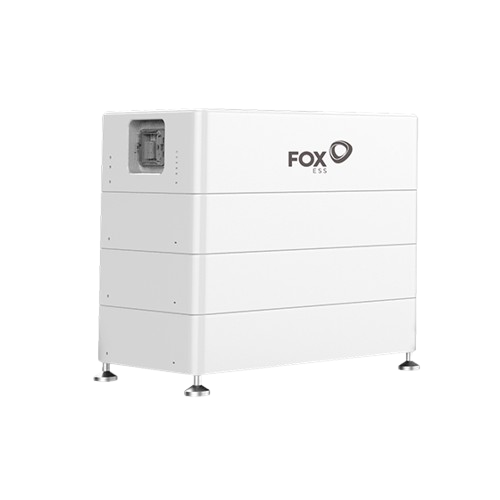
FoxESS modular home battery storage system
FoxESS battery image Replace the image URL with your preferred product image if needed.
Solar energy storage Use more of your solar generation
Modular battery options Capacity depends on the model
01 Existing solar systems
02 New solar and battery systems
03 FoxCloud 2.0 monitoring options
FoxESS Home Battery Storage

Why Consider a FoxESS Battery?

FoxESS offers residential battery systems designed to work with compatible inverter technology and energy monitoring. Its Australian range includes modular options such as EP5, EP11, EP12 Plus and EQ5500, alongside larger-capacity systems.

For Australian homeowners, the key is choosing a battery that matches solar generation, evening electricity use, backup needs and the inverter installed at the property.

The most important question is:

Is a FoxESS battery suitable for your home?

Six things to consider about FoxESS battery systems

Store Surplus Solar

Capture suitable excess solar generation during the day and store it for later use. A correctly sized battery can help shift solar energy into the evening, when panels produce less.

Increase Solar Self-Consumption

Use more of the electricity your solar system generates instead of drawing as much from the grid when solar production is low. Your actual savings depend on usage patterns, tariffs and system sizing.

Different Storage Options

FoxESS Australia's range covers different household requirements. Published system energy ranges include 5.18–20.8 kWh for EP5, 10.36–41.60 kWh for EP11 and 10.92–49.14 kWh for EQ5500.

Capacity varies by model

Smart Energy Monitoring

Compatible systems can use FoxCloud 2.0 to view available generation, battery and energy-flow data. Supported functions depend on the installed equipment, configuration and account.

FoxCloud 2.0

Backup Power Options

Selected FoxESS inverter and battery configurations support EPS or backup operation. Which circuits remain powered—and the available output—depends on the inverter, wiring and backup design.

Compatible System Design

FoxESS batteries must be paired with compatible inverter models and approved configurations. Battery voltage, communication, charge/discharge limits and installation requirements all matter when designing the system.

Choosing the right system matters. Published capacities are product-range figures, not a guarantee that every combination works with every inverter. Confirm the exact model compatibility, usable energy, backup capability and current Australian product documentation before selecting a system.

Explore the official FoxESS Australia battery range
FoxESS Battery Range

FoxESS CQ7 Battery Systems

The FoxESS CQ7 is a modular, high-voltage battery storage system designed for homes and larger residential energy requirements. Its expandable configuration lets you choose a storage capacity suited to your energy use, available space and future plans.
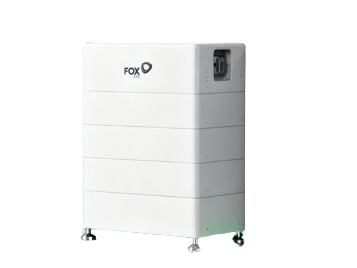
FoxESS CQ7 modular high-voltage home battery storage system
CQ7 SERIES

Modular High-Voltage Battery Storage

Store more of your solar energy for later.

During sunny periods, a compatible solar and battery system can store surplus solar electricity for use when your panels produce less energy. The CQ7's modular design supports a range of system sizes, allowing your installer to plan storage around your home.

Published system capacity range
13.92–97.44 kWh
Nominal capacity across CQ7-L2 to CQ7-L14 configurations. The selected model and installation determine the final system size.

The CQ7 uses lithium iron phosphate (LFP) battery chemistry, CAN communication and natural-convection cooling. It is designed for stand-mounted indoor or outdoor installation, subject to the installation manual and site conditions.

Choose Your Storage Size

One battery range. Multiple system sizes.

The CQ7 range can be configured from 13.92 kWh up to 97.44 kWh nominal energy. The right capacity depends on how much electricity your household uses after sunset, how much surplus solar you generate and whether your future usage may increase.

13.92 kWh Up to 97.44 kWh
13.92kWh · L2
20.88kWh · L3
27.84kWh · L4
34.80kWh · L5
41.76kWh · L6
48.72kWh · L7
55.68kWh · L8
62.64kWh · L9
69.60kWh · L10
76.56kWh · L11
83.52kWh · L12
90.48kWh · L13
97.44kWh · L14

Capacities shown are nominal figures from the supplied CQ7 V1.3 datasheet. Usable energy depends on the applicable battery revision and its approved operating limits. Ask us to confirm the exact model and usable capacity for your quote.

At a Glance

FoxESS CQ7 Technical Specifications

Key figures from the CQ7 V1.3 datasheet supplied for this page. Specifications can vary by configuration and product revision.

Battery chemistry
LFP (Lithium Iron Phosphate)
Nominal system energy
13.92–97.44 kWh
Battery module capacity
6.96 kWh per module, as stated in the supplied datasheet
Depth of discharge
90% in supplied datasheet V1.3; confirm against the exact Australian model/revision
Round-trip efficiency
Greater than 95% under the datasheet test conditions
Recommended charge/discharge current
50 A
Maximum charge/discharge current
80 A
Peak discharge current
120 A for 60 seconds, under specified conditions
Communication
CAN
Maximum expansion
Up to 14 modules in series, as listed in the supplied datasheet
Installation location
Indoor or outdoor, stand-mounted, subject to installation requirements
Cooling
Natural convection
Ingress protection
IP65
Dimensions
660 mm wide × 360 mm deep; total height varies by configuration from 420 mm to 2,280 mm
Weight
Approximately 105.5–711.5 kg, depending on the listed configuration
Warranty
FoxESS Australia's published warranty policy lists a 10-year standard warranty for CQ7. Applicable performance and throughput conditions must be checked against the current policy.

Test conditions matter: the datasheet's round-trip efficiency figure is specified at 25°C and 0.3C charge/discharge. Temperature, state of charge, battery configuration and inverter compatibility can affect real-world operation. Confirm the approved configuration before quoting.

Features That Matter

How CQ7 features can benefit your home

Key technical features explained in practical, everyday terms.

01

Expandable modular design

Scalable from 13.92 to 97.44 kWh. Your installer can match storage to your household rather than forcing a one-size-fits-all capacity. Expansion follows approved configurations.

02

LFP battery chemistry

Lithium iron phosphate (LiFePO₄). Widely used in stationary storage for thermal stability and cycle life. Correct installation and compliance remain essential.

03

High round-trip efficiency

Greater than 95% under datasheet conditions. Less energy is lost during charge-discharge cycles. Real-world performance also depends on inverter, temperature and operation.

04

High-voltage architecture

Designed for compatible high-voltage equipment. Supports efficient power conversion when correctly matched. Inverter compatibility must always be verified.

05

CAN communication

Coordinated battery management. Compatible devices exchange operating information for coordinated charging and discharging. Correct setup and firmware are important.

06

IP65-rated enclosure

Dust and water-jet resistant. Designed for indoor or outdoor stand-mounted installation under the right conditions. Exposure, clearances and mounting must meet the manual.

07

Wide operating temperature range

Optional warm-up function. Helps installers plan for different climates. Charge/discharge power may reduce at low temperatures — confirm limits for the exact model.

08

Natural-convection cooling

No dedicated forced-air fan. Relies on passive airflow for thermal management. Correct clearances and installation conditions remain necessary.

09

Built-in fire protection function

Additional product safeguard. Should not be interpreted as making the battery fireproof. Placement, clearances and compliance with safety requirements still apply.

10

Stand-mounted installation

Indoor or outdoor flexibility. Dimensions and weight vary significantly by configuration. Larger systems are heavy — access, support and handling need planning.

Choosing the right CQ7 configuration

A larger battery is not automatically the best choice. The suitable system depends on your daily and evening energy use, solar generation, inverter compatibility, available installation space and future plans. Backup capability also depends on the compatible inverter, system design and selected backup circuits; it should not be assumed from battery capacity alone.

Considering a FoxESS CQ7 battery?

Make My Solar can help assess the storage size and compatible system configuration for your home. Ask us to confirm usable energy, inverter compatibility, warranty conditions and installation requirements for the exact model being quoted.

Request a CQ7 Quote
Compatibility & System Design

Can a FoxESS Battery Be Added to Existing Solar?

In many homes, a battery can be added without replacing the solar panels. But whether a FoxESS CQ7 is suitable depends on your existing inverter, the battery connection method, your electrical supply, and the exact equipment combination. Checking these details first helps avoid specifying a battery that cannot be connected as planned.

The important question is not just your solar brand.

It is the exact inverter model, whether it supports an approved battery connection, and how the CQ7 would be integrated. A FoxESS battery is not automatically compatible with every FoxESS inverter or every third-party inverter. The proposed combination must be checked against the manufacturer's current compatibility documents.

Two Technical Pathways

How can a battery connect to your solar system?

There are two common system architectures. They solve different problems, and neither should be selected before checking your existing equipment.

Retrofit pathway

AC-coupled battery system

A separate battery inverter connects to the home's AC electrical system. Your existing solar inverter may continue operating, while the battery inverter manages battery charging and discharging.

Solar panels
→
Existing solar inverter
→
Home AC system

When it may suit: You want to retain a working existing solar inverter, and a suitable battery-inverter solution is available.

Important: AC coupling is a general retrofit architecture, not confirmation that the CQ7 battery can connect directly to your existing inverter. The required FoxESS equipment and approved configuration must be established first.
Integrated pathway

DC-coupled hybrid system

A compatible hybrid inverter manages the solar panels and battery. Solar DC electricity can charge the battery through the hybrid system without first being converted to AC by a separate solar inverter.

Solar panels
→
Compatible hybrid inverter
↔
CQ7 battery

When it may suit: You are installing solar and battery together, or replacing an existing inverter with a compatible hybrid model.

Important: The battery voltage range, permitted battery configuration, inverter firmware and phase requirements must match the manufacturer's approved combination.
Manufacturer Compatibility

Which FoxESS inverters are listed for the CQ7?

FoxESS publishes a specific CQ7 inverter compatibility declaration. The following are examples of inverter families named in that declaration—not a guarantee that every model or battery size works with every inverter.

Single-phase hybrid
H1-E-G2 AC1-E-G2 KH KA
The declaration lists specific 3–6 kW H1/AC1 E-G2 models and 7–10.5 kW KH/KA models. The listed battery configurations differ between these groups.
Three-phase hybrid
H3 Smart H3 Pro
The declaration lists H3 Smart models from 5–15 kW and H3 Pro models from 15–30 kW. Their permitted CQ7 battery configurations are not identical.
Higher-power three-phase
H3 Plus
The declaration lists H3 Plus models from 50–125 kW, with different battery-string limits from the residential inverter groups. Do not assume these larger-system configurations are suitable for a residential installation.
Battery configuration
The declaration sets minimum and maximum CQ7 configurations according to the inverter family. For example, listed H1/AC1 and KH/KA combinations support different limits from H3 Smart, H3 Pro and H3 Plus. The exact inverter model and battery variant must be checked in the current declaration.

Do not use this family list as final design approval. The official declaration specifies permissible battery input-voltage windows and the number of modules permitted in each string. The precise inverter suffix, CQ7 variant, battery count, firmware and current Australian documentation must be verified before a system is quoted or installed.

Source: FoxESS Manufacturer Declaration of Inverter Battery Compatibility — CQ7 Series . Always use the latest applicable manufacturer document for final design.

Before We Recommend a System

What we check before confirming compatibility

These checks help determine whether the existing equipment can be retained, whether additional hardware may be required, and what installation work needs to be allowed for.

01

Existing inverter make, model and battery support

We identify the exact inverter model and revision, not just its brand. We check whether it has an approved battery input, whether the CQ7 is supported, and whether the proposed configuration requires a compatible FoxESS hybrid inverter or separate battery-conversion equipment.

02

Battery voltage, configuration and operating limits

The CQ7 operating voltage range spans 104.4–919.8 V depending on module count, with nominal voltage scaling from 115.2 V (2 modules) to 806.4 V (14 modules). The inverter's permitted battery-voltage window must match the proposed configuration. We also check supported module counts, charge/discharge limits, CAN communication requirements and manufacturer compatibility documentation.

03

Solar array size and daytime surplus

Panel capacity alone does not determine the right battery. We consider generation, daytime household demand, export patterns and evening usage to assess whether there is enough surplus energy to charge the proposed storage system.

04

Single-phase or three-phase supply

The supply arrangement affects inverter selection, power distribution and backup design. A single-phase backup system does not automatically provide backup to every circuit on a three-phase property.

05

Switchboard, metering and grid connection

The installer assesses protective devices, circuit capacity, metering and export-control requirements. A switchboard that has spare physical space is not automatically suitable for additional generation or storage equipment.

06

Backup requirements and installation location

We clarify whether backup is required during a blackout and which circuits matter most. The inverter, backup switching, circuit arrangement and battery capacity must be designed for that goal. We also assess space, access, mounting and manufacturer installation clearances.

Your Starting Point

Choose the pathway that fits your home

Existing solar

I already have solar panels

We assess your existing inverter and electrical setup to establish whether a compatible CQ7 solution is possible, what equipment may need to change, and whether your existing solar can remain in service.

New installation

I'm installing solar and a battery

We can assess the solar array, compatible inverter, CQ7 configuration and your household's usage together, rather than trying to match a battery to equipment after installation.

Next Step

Check My FoxESS Compatibility

Have your inverter model handy? Send us your existing system details and we can assess the next steps for a FoxESS CQ7 battery solution.

Check Compatibility
FoxESS Battery Cost

How Much Does a FoxESS Battery Cost in Australia?

The cost of a FoxESS battery installation depends on battery capacity, inverter configuration and the electrical work required at your property. There is no single fixed price for every system.

Battery Capacity

Larger storage systems generally require more battery modules, increasing the overall system cost.

Inverter

The right inverter depends on your system design, battery compatibility and existing solar equipment.

Installation

Battery location, property access, cable runs and installation complexity can affect labour costs.

Switchboard

Some properties may need switchboard, wiring or other electrical upgrades before installation.

Backup Power

Backup during outages may require compatible equipment, additional wiring and dedicated installation work.

Government Incentives

Eligible systems may qualify for support under Australia's Cheaper Home Batteries Program, subject to current rules.

Note: Incentive eligibility and the discount amount depend on current program requirements and the system installed. Check the official program details.

FoxESS Battery Rebates · Enhanced
FoxESS Battery Incentives

FoxESS Battery Rebates in Australia

Australia's Cheaper Home Batteries Program can reduce the upfront cost of an eligible battery installation. The support is delivered through Small-scale Technology Certificates (STCs), not a fixed cash rebate for every FoxESS battery.

$

What support could you receive?

The Australian Government describes the program as providing a discount of around 30% for eligible systems, but your actual discount depends on the eligible battery configuration, usable capacity, installation date and current STC rules. A specific dollar amount should be confirmed in your quote.

The key rules customers should know

5–100 kWh

Nominal battery capacity

Eligible systems must fall within the program's nominal-capacity range. The final configuration must meet all other requirements too.

50 kWh

STC capacity limit

STCs can be calculated on up to the first 50 kWh of eligible usable battery capacity, even if the installed system is larger.

6.8

2026 STC factor

For installations from 1 May to 31 December 2026, the factor is 6.8 before the capacity tiers are applied. It is scheduled to change in 2027.

How the 2026 capacity calculation works

Eligible usable capacity band STC factor applied to that band
First 14 kWh 100% of the 2026 factor
Above 14 kWh, up to 28 kWh 60% of the 2026 factor
Above 28 kWh, up to 50 kWh 15% of the 2026 factor
Above 50 kWh No additional battery STCs beyond the 50 kWh limit

Worked example: a 34.8 kWh battery system

For illustration only, assume the approved usable capacity is 34.8 kWh and the installation takes place between May and December 2026.

(14 × 100%) + (14 × 60%) + (6.8 × 15%) = 23.42 weighted kWh
23.42 × 6.8 = approximately 159 STCs

This is an indicative calculation, not a promised rebate or final certificate entitlement. The approved product listing, certified usable capacity, official calculation and rounding rules determine the actual result. The dollar value depends on how the STC discount is passed through to the customer.

Does your FoxESS CQ7 battery qualify?

✓

Approved battery model

The exact battery model and final configuration must be on the Clean Energy Council's currently approved battery list. Do not assume every CQ7 variant qualifies automatically.

✓

Accredited installation

Installation must be completed under the program's requirements by a Solar Accreditation Australia (SAA) accredited installer with the required battery endorsement.

✓

Solar and grid requirements

The battery must be installed with a new or existing solar PV system of no more than 100 kW and meet the applicable technical and electrical safety requirements.

✓

VPP capability and prior claims

Grid-connected systems must be technically capable of participating in a Virtual Power Plant (VPP). Only one battery system per eligible premises can generally receive STCs; prior claims and expansions have specific rules.

Important: The STC factor is based on the battery's installation date, not simply the date you sign a quote. Government rules and approved product lists can change. Ask for the proposed CQ7 model, eligible usable capacity, estimated discount and installation timing to be confirmed before relying on an incentive in your budget.
FoxESS Monitoring

Monitor Your FoxESS Solar & Battery System

The exact monitoring experience depends on the FoxESS equipment, meters and configuration installed at your property. Systems using FoxCloud 2.0 can provide visibility into solar generation, battery state of charge, charging and discharging activity, household consumption, grid import and export, system status, and active faults or warnings[citation:1][citation:7].

Connecting your system to FoxCloud monitoring

After installation, your system can be connected to the FoxCloud 2.0 monitoring platform. The process varies slightly depending on whether you are setting up as an owner or an installer, and whether the WiFi dongle or datalogger has already been configured.

1

Install the WiFi dongle or datalogger

The communication module (Smart WiFi stick or WLAN-WW datalogger) must be plugged into the WIFI/GPRS/USB port on the underside of the inverter. Rotate the nut clockwise to secure it[citation:3][citation:9].

Power on the inverter and wait approximately one minute for the module to start.
2

Download the FoxCloud 2.0 app

Search for “FoxCloud – Fox ESS” on the Apple App Store or Google Play. The app requires iOS 13+ or Android 7.0+ with at least 1 GB of available memory[citation:2][citation:7][citation:13].

3

Create your account

Open the app, select “Getting Started”, choose your region, then tap “Create an account”. Select “I am an owner” (or the appropriate installer role) and complete the registration with your email address[citation:2][citation:13].

4

Connect the datalogger to your home WiFi

The app will search for nearby devices. Select your datalogger from the detected list (scan the QR code or enter the SN manually), then choose your home WiFi network. Important: the dongle requires a 2.4 GHz WiFi network; 5 GHz networks will cause configuration to fail[citation:2].

Default SSID format: “W-xxxxxxx” with password “mtmt2020” if manual configuration is needed[citation:3][citation:9].
5

Link your device to the plant

After network configuration completes, the app will associate your device with a monitoring “Plant” (named “Your Home” for owner accounts). You can then access the dashboard showing real-time energy flow, system status, and historical data[citation:7][citation:17].

What FoxCloud 2.0 can show you

The monitoring platform displays the information available from the specific equipment, meters, and configuration installed at your property. Depending on your system, this can include:

Solar generation

Real-time PV output and historical yield

Battery state of charge

Current SOC percentage and capacity

Battery charging

Charge power, current, and energy

Battery discharging

Discharge power, current, and energy

Household consumption

Home load power and energy usage

Grid import

Power drawn from the grid

Grid export

Power exported to the grid

System status

Operating mode and device state

Faults & warnings

Active alarms and historical alerts

How energy flows through your system

FoxCloud 2.0 displays a real-time energy flow diagram showing the direction and magnitude of power between your solar panels, home, battery, and the grid[citation:7].

Solar Generation
↓ DC / AC
Home Consumption
↙
Battery
↘
Grid
Note: The exact flow diagram shown in the app may vary depending on your inverter model, whether a meter is installed, and your system configuration. Directional arrows indicate the path of energy transfer at any given moment[citation:7].

Important: Not every FoxESS installation displays exactly the same monitoring information. The data available depends on the specific inverter model, whether a consumption meter or smart meter is installed, the battery configuration, and how the system is set up. Some older or non-hybrid systems may show more limited data. Always refer to your system's actual FoxCloud dashboard to see what information is available for your specific installation.

Personalised Battery Advice

Get Your FoxESS Battery Quote

Tell us about your home and energy needs. Our team will help you explore a suitable FoxESS CQ7 battery configuration with current STC incentives applied where eligible.

01 Your contact details
02 Your energy setup
Do you already have solar? *
03 Your FoxESS battery preferences
Quarterly electricity bill *
Preferred battery capacity *
Backup power during outages? *
Interested in STC rebate assistance? *
Your details are sent securely to Make My Solar. We never ask for payment or sensitive information through this form. If you receive a suspicious message claiming to be from us, please verify by calling our official number before responding.
  • Australian-owned business
  • No obligation quote
  • Your details stay private
  • Reply within 1 business day
Scroll to Top